

Published March 16, 2026
David Escobar
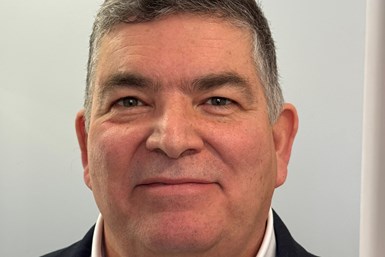
David received his bachelor’s degree in mechanical engineering from NYU Polytechnic School of Engineering and has spent his career in industrial research and development and engineering roles.
I started my career at General Dynamics, Electric Boat Division, eventually designing cooling systems for Nuclear Submarine propulsion plants. I saw the diversity of the valves and controls used and the critical nature of their function, and later when I decided to broaden my horizons beyond a single customer (the U.S. Navy), the valve industry felt like a natural next step. Thirty years later, I’m still grateful I made that choice. This industry has provided me with continuous learning, challenges and purpose.
I was introduced to VMA by David Bayreuther, a mentor, as he transitioned off the technical committee to focus more on standards development. It was a great opportunity to network and engage with the larger community of end users, suppliers and competitors. I was attracted to the mission of providing timely, actionable technical content through the technical seminars which are now one of the core offerings of the VMA Valve Forum.
At Valmet, we’re completing a strategic transformation that positions us to serve even more of our customers' flow control needs. It’s energizing to be part of a global organization in a period of meaningful growth.
Within VMA, I’m contributing to the recently completed 2026 strategic plan, with a focus on modernization and expanded member value. As chair of the technical committee, I’m also helping develop new ways to extend our impact beyond the technical track of the Valve Forum.
Personally, with my children out of the house and thriving, I’m rediscovering travel and recreation, something I haven’t had much time for in recent years.
For critical issues such as PFAS regulation and emerging compliance requirements, VMA continues to be a leading and trusted source. I also remain active in standards organizations including MSS, API and ASME. Participating in these groups allows me to stay connected to the technical, regulatory and market forces shaping our industry.
One major challenge is workforce development. Manufacturers often struggle to attract the digital generation, even though today’s manufacturing environment is increasingly high‑tech, automated and data‑driven. Partnerships with technical colleges and high school co‑op programs have proven invaluable. These programs bring in motivated individuals with strong foundational skills and a desire to learn. To retain them, companies must pair this with thoughtful long‑term career development.
A second challenge is knowledge loss as experienced employees retire. Both manufacturers and end users are feeling the impact. This makes knowledge transfer and targeted training — such as VMA’s Valve Basics programs — more important than ever.
Well, we cannot talk about new technology without acknowledging the rise of artificial intelligence (AI) in our daily work. This technology is already saving time and money when used appropriately. The challenge is to know how to use it effectively. When making decisions, the need to validate sources and detailed information is critical. Like all software tools, it is designed to give an answer. It is up to the user to be skeptical of the result and ensure the validity of the answer.
Speak up, get involved, and be curious. This industry offers enormous opportunity, but you get out what you put in. If you’re in a room and have a question, chances are others are wondering the same thing. Engagement, whether through VMA or standards organizations, helps build knowledge, credibility, and community. Don’t sit on the sidelines; contribute and you’ll grow quickly.
Outside the office, I prioritize family time and visit my children as often as I can. I enjoy being on the water, motorcycling, and woodworking. I also stay active in my community by serving on the local Board of Health and on my church vestry. Giving back has always been important to me.
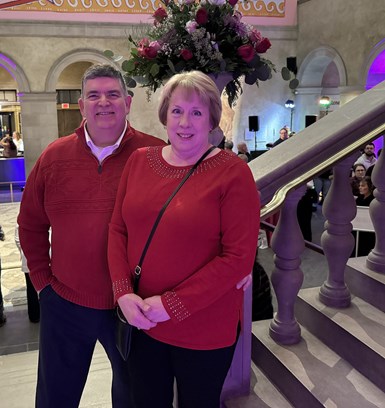
David and his wife.
I put myself through school as a carpenter, which sparked a lifelong appreciation for building and craftsmanship. Woodworking is still a passion—recently I finished a set of custom chairs with a friend. I also have a deep love of music, especially live performances, and I sing in my church choir. There’s nothing quite like singing alongside a century‑old pipe organ.



Why engineered mounting kits are critical to valve automation integrity.
April 7, 2026
Simple automations can create big gains on the shop floor.
April 3, 2026
Prevention can help operators avoid system damage and shutdowns.
March 30, 2026