
Produced by


Published September 14, 2025
The Rosemount 3144S Temperature Transmitter improves ease of use with plug-and-play configuration, a large backlit display, and Bluetooth wireless connectivity.
Emerson announced the release of the Rosemount 3144S temperature transmitter, a new industrial measurement solution with the flexibility to meet the most demanding temperature measurement challenges, allowing for increased efficiency, safety and profitability.
Today’s technicians and managers expect temperature measurement technology to be highly accurate and reliable. Ease-of-use is also critical as the process industry workforce transitions to more recent hires, with fewer employees overall.
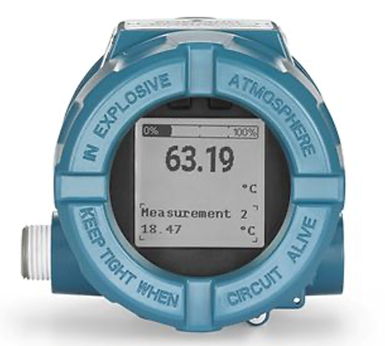
Rosemount 3144S Temperature Transmitter.
Source: Emerson
The Rosemount 3144S Temperature Transmitter offers 0.05 degrees Celsius (0.09 Fahrenheit) of accuracy needed for processes that require the highest measurement performance. It is available with an optional 20-year stability specification and a 20-year limited warranty.
Emerson’s new ReadyConnect Technology allows ease-of-use by enabling plug-and-play sensor configuration with a push of a button, eliminating the need to manually input sensor information and Callendar-Van Dusen coefficients, saving configuration and commissioning time.
To address thermowell challenges, the transmitter greatly expands the application coverage of Rosemount X-well technology, a non-intrusive measurement solution, which can now measure up to 650 degrees C (1,202 degrees F).
Learn more on the company’s website.





Industry news from the flow control world.
November 26, 2025
These standards have been released in the past few months.
November 25, 2025
Expanded valve and actuator design and manufacturing capabilities further expand FMD offerings and global customer base.
November 25, 2025